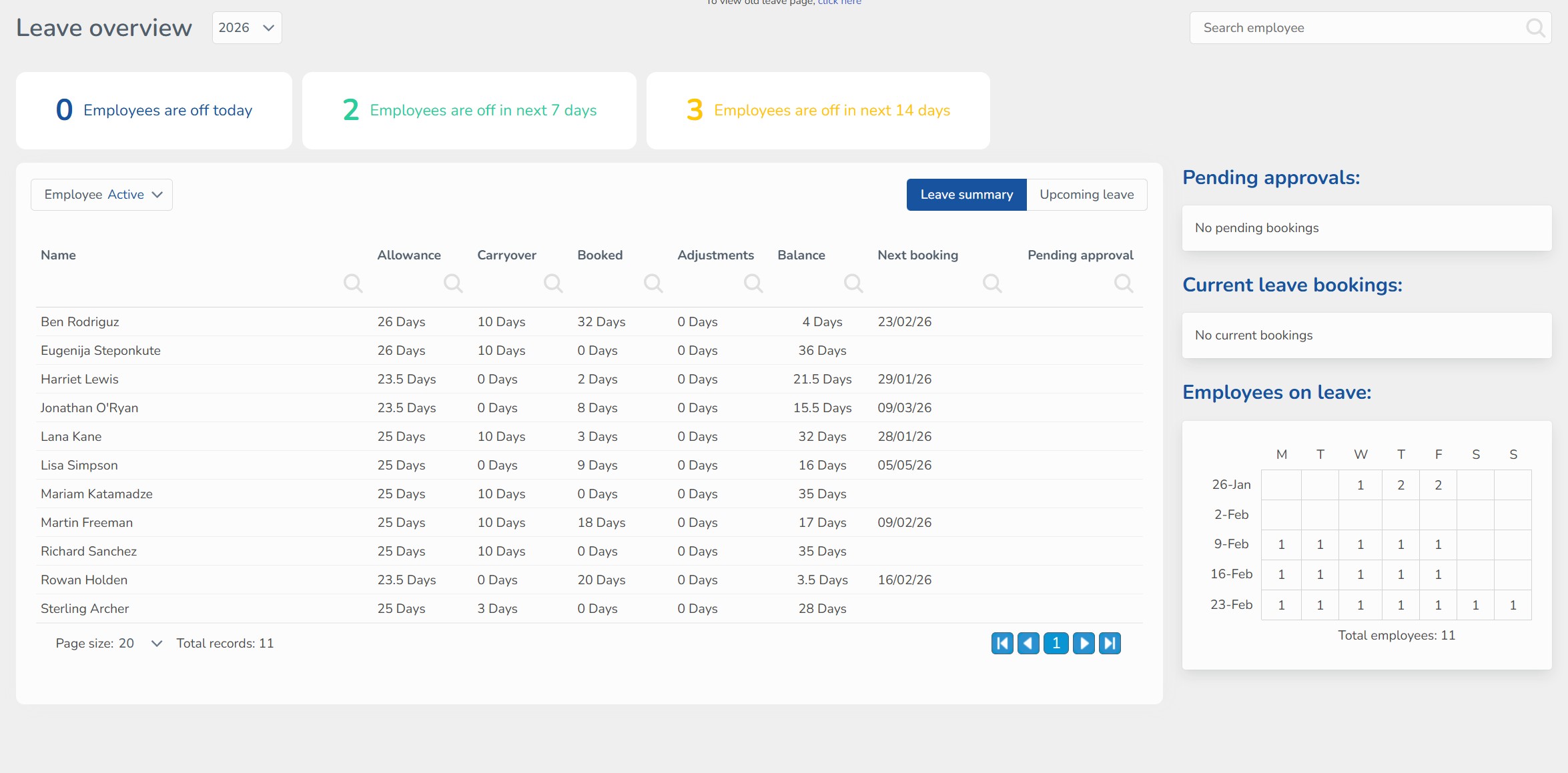
Employee leave management software
A modern, intuitive leave-management system that makes requesting and approving time off effortless for your whole team. Our platform is accessible through desktop browsers or portable devices, providing visibility and control over staff absences wherever you are.
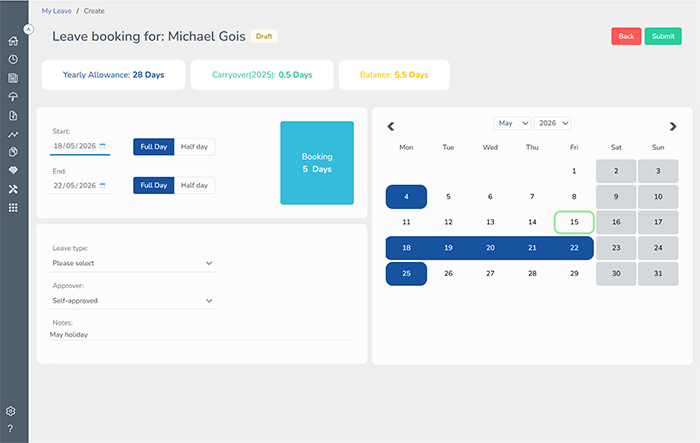
Streamlined leave requests
Give your employees a simple, user-friendly way to request time off. Our leave management software lets staff submit requests in seconds, whether they're at their desk or on the go — and managers can approve them directly via email or inside the system.
Key benefits
- Fast submission and approval workflow
- Mobile friendly interface
- Automatic allowance and carryover calculations
- Multiple stage approval
- Global holiday calendars for multi-region workforce
Whether you’re a small business or a multi‑site organisation, our time off software scales with your needs.
Full visibility for managers and HR
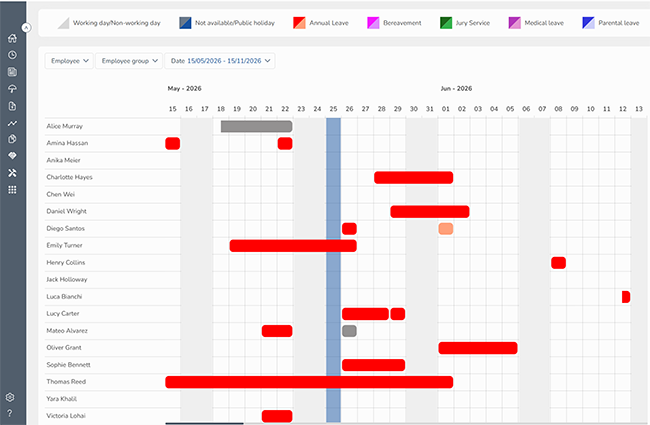
Our employee holiday booking system includes a centralised leave calendar that provides instant clarity on who is off, helping you keep teams adequately staffed. Calculate carry-over balances with capping rules, access graphical views of booked leave and centralise the view of the team’s availability.
Features
- Team and company-wide leave calendars
- Individual leave balances and summaries
- Enforce mandatory holiday shutdown periods
- Team dashboards for quick reminders of who is off in the coming weeks
- Clear audit trails and automatic notifications
Prevent team understaffing
Avoid the issue of too many team members requesting time off at the same time. Our leave bookings software helps maintain operational capacity by allowing you to set minimum staffing levels per team or department.
- Define required minimum staffing thresholds for each team.
- If too many team members have already booked leave for a specific date range, the system automatically prevents additional bookings.
- Employees are notified that the limit has been reached and prompted to choose alternative dates.
- Managers retain override capabilities when exceptions are needed.
This ensures continuity, protects workload balance, and prevents operational disruption during peak periods.